Posts

Showing posts with the label PhD students

Publication alert: Phasor-FLIM visualizes and quantifies polluting nanoplastic particles in live intestinal epithelium

Image
  Increased micro- and nanoplastic (MNP) pollution and its poorly understood biomedical impact raises questions on their cell and tissue uptake mechanisms and effects on the absorptive tissues. Dmitriev’s team reports a new microscopy-based approach to perform dynamic imaging of dye-modified micro- and nanoplastics (MNP). When combined with stem cell-derived intestinal organoids, with controlled apical and basal polarity, this approach enables for sensitive detection and quantification of MNPs, their internalization and biological effects.  The work was published in Light: Science & Applications , big thanks to all collaborators and researchers involved, especially Irina, Hang (first 'big paper' in PhD) and Bert! We hope to get this research line funded and expand towards studying effects of MNPs on the brain, tooth development and other tissues! Press-release on Eurekalert (14-09-2025)  

New synthetic hydrogels for tumour spheroids and intestinal organoid cultures (publication)

Image
  We collaborated with groups of Prof. Richard Hoogenboom and Prof. Devriendt (Ghent University) and tested application of poly(2-alkyl-2-oxazoline) hydrogels (PAOx) for 3D cell cultures of cancer and stem cells. We found that encapsulation of small intestinal organoids into PAOx hydrogels results in polarity reversion, i.e. transition from basal to apical-out phenotype. This is useful for studying drug delivery, nutrient absorption and host-microbiota interactions within this model.  This figure shows dramatic differences of mitochondrial polarisation (TMRM) and appearance (transmission light) in small intestinal organoids, observed after apical-out transition (PAOx), in contrast to conventional Matrigel-grown culture: Since the PAOx hydrogels can show variable mechanical properties, we tested if encapsulation into stiff and soft hydrogels can affect behaviour of cancer cells in 3D: indeed, with HCT116 spheroids we found that stiffness of the hydrogels affect cell migration f...

Happy New Year 2025! New publications.

Image
Wow, time really does fly! It's been a while since our previous update but by no means our team was idle.  End of 2024 was memorable with exciting conferences, including SPAOM 2024, Histochemical Society Annual online meeting 2024, FHERITALE consortium and others! We've received funding to study neurodevelopmental and neurodegenerative diseases (more news soon) so we can plan new & exciting research projects. Our team currently hosts 2 international researchers, Valerie Cote and Dr. Simone Perottoni, both learning and doing exciting science in FLIM, organoids and imaging of cancer cells / tissues. In addition, we are looking forward to host more of PhD students from FLIMagin3D consortium! Here are some recent publications, from our team and collaborative research projects: Sheehan A, Okkelman IA, Groslambert G, Bucher C, Dmitriev RI, Filatov MA: Optoelectronic Properties and Fluorescence Lifetime Imaging Application of Donor-Acceptor Dyads Derived From 2,6-DicarboxyBODIPY ...

Conference presentations: September 2024

Image
Our team is growing and we can present at the same time in two different places now! PhD candidate Nore Van Loon (joint project with FunGen lab, Prof. S. Vergult) gave a talk at the Methods and Applications of Fluorescence 2024 conference (8-11 September Valencia, Spain)! She presented her work in progress on using autofluorescence and fluorescent cholera toxin labelling to monitor differentiation of neural cells in human iPSC-derived 'brain' organoids. This work is a part of ongoing efforts of bringing together multi-omics approaches and advanced imaging of organoids to better understand aetiology of such neurodevelopmental disorders as FOXG1 syndrome, funded by the Special Research Fund at Ghent University (BOF) and Marguerite-Marie Delacroix foundation. At the same time, Prof. Ruslan Dmitriev travelled to Munster, Germany, to present an invited lecture on imaging oxygenation and cell metabolism in multicellular spheroids in 4th Inflammation & Imaging symposium! This l...

Production and Multi-Parameter Live Cell Fluorescence Lifetime Imaging Microscopy (FLIM) of Multicellular Spheroids (JOVE protocol)

Image
ALERT: New publication from our group! Angela, Gabriele, Hang, Nore, Nina and Irina teamed up to produce a video protocol paper, focusing on comparing various multicellular spheroid formation methods, suitable for 'downstream' live multi-parameter fluorescence lifetime imaging microscopy (FLIM) and imaging cell oxygenation. This protocol is illustrated with examples of autofluorescence-based FLIM microscopy of NAD(P)H, oxygenation and cell death, as well as imaging of visible flavin-based cell autofluorescence, performed in tumour and stem cell-derived spheroids. The article is also a part of the Methods collection 'Quantitative Live Cell Imaging of 3D Models', which is going to expand in the future.    Link to the publication: https://www.jove.com/t/66845/production-multi-parameter-live-cell-fluorescence-lifetime-imaging The Methods Collection (Journal of Visualised Experiments, JOVE):  https://app.jove.com/methods-collections/902

FLIMagin3D network (we are hiring!)

Image
Are you looking for a PhD and interested in advanced live cell microscopies? Perhaps in FLIM? In some of the best labs across EU and UK? With funded mobility? We have good news for you: within the Horizon-funded MSCA doctoral network we are hiring 12+2 PhD students. More information here . Apply via EURAXESS / FLIMagin3D website or for UK here  Twitter 

2019 in review

Image
In year 2019 we achieved the following: - 1 PhD student successfully graduated ( Neil O'Donnell , 2014-2018) - We published 5 research articles on new pH-sensitive ( Analytical Chemistry ), redox-sensitive ( Dyes and Pigments ) and O2 sensing films ( Sensors and Actuators B ), new FLIM method of visualising mitochondrial membrane potential ( Cytometry A ) and a work on tissue engineering ( Xenotransplantation ) - Submitted 1 preprint ( BioRxiv ) on assessing metabolism in the intestinal organoids, together with 2 other articles under consideration, 1 book chapter for the book 'Intestinal stem cells' (Springer, 2020?). - We presented at ISSCR Organoids Amsterdam Symposium (poster), Sechenov Biomedical Summit (Invited talk, organised and chaired a session), ASCB-EMBO 2019 (talk and poster), visited Leica training center and University Tubingen with short-term collaborative visits, lectures and seminars. - 3 funding awards were secured: SFI Industry Fello...

New Ph.D. from the lab!

Image
Neil O'Donnell (supervised by Dr. R. Dmitriev and Prof. D. Papkovsky ) has successfully defended his Ph.D. thesis on 22-Jan-2019! Neil's Ph.D. project ('New biosensors for metabolic imaging', 2014-2018) was funded by the Science Foundation Ireland (SFI) SIRG grant and focused on development, evaluation and application of biosensors, based on advanced coupling chemistry and various recombinant proteins. Neil participated in the following projects: 1. Metallochelate coupling of Pt-porphyrins to peptides, proteins and self-assembling protein nanoparticles for advanced biosensing applications. Published in Bioconjugate Chemistry journal. 2. pH-sensitive fluorescent protein-based nanoparticles for imaging of cancer and neural cells (unpublished). 3. Book chapter on the available biosensors for imaging of 3D tissue models. 4. Cellulose-binding domain fused with fluorescent proteins as a tool for design of hybrid 'biosensing' scaffolds for tissue engine...

Twitter

Image
Metabolic Imaging Group & Laboratory of Biophysics and Bioanalysis can be found on Twitter now! Make sure to follow our channel  @ PhotoBioLab  to stay informed about our latest accomplishments!

Recent graduates from the lab

Image
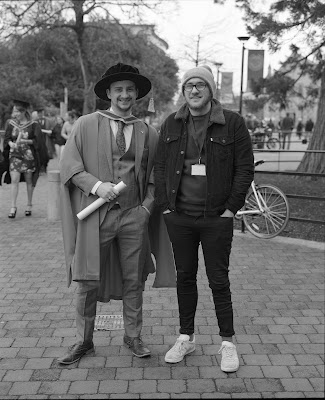
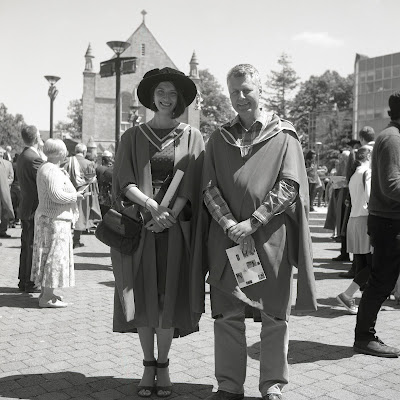
Congratulations to new PhDs raised in the Lab, Dr. James D. Jenkins and Dr. Caroline Kelly, who graduated on 24-Feb! Best of luck in future career! Some photos from the event:  Dr. J. Jenkins and PhD candidate N. O'Donnell  Dr. Caroline Kelly and Dr. J. Jenkins  Dr. J. Jenkins Dr. J. Jenkins and Dr. I. Okkelman

New Ph.D. from the lab

Congratulations to Caroline Kelly for successful defence of her Ph.D. thesis (8-Nov)! Caroline, who joined the lab in 2012, focused her research at development of novel ways of phosphorescent dye impregnation in solid-state sensors for food and packaging applications. Her supervisors were Prof. D. Papkovsky and Prof. J. Kerry (Food Science Dept.). Caroline has published a number of research articles including works on solvent crazing and polyolefin fabric materials .

New Ph.D. from the lab

Image
Congratulations to James Jenkins , who successfully defended his Ph.D. on 20-Oct-2016 at UCC. He pursued his Ph.D. studies in period of 2013-2016 (3 years) under supervision of Prof. D. Papkovsky and Dr. R. Dmitriev. His project addressed development of multi-parametric FLIM and PLIM live cell microscopies for improved design and studies of 3D tumour cell models. His published works include: design of O2-sensitive hybrid scaffold materials for 3D cell culture , study of expression and function of SPCA2 ATPase in colon cancer cells and imaging of T and O2 gradients in tumour spheroids . Well done, James!

Graduation of Drs. Alicia H Waters and Alina V. Kondrashina - 180615

Image
Congratulations to two fresh PhDs from the Lab, who were officially graduated last week. Congratulations to supervisor, Prof. D. Papkovsky! Best of luck Alina and Alicia in your future career(s)! Below are some photographs from the event:  Dr. A. Kondrashina with supervisor, Prof. D. Papkovsky  Dr. A. Waters and Dr. A. Kondrashina Dr. A. Kondrashina

New PhD graduate from the Lab

Congratulations to Alicia H. Waters for successful defence of Ph.D. degree in biochemistry! Alicia was a member of the team in period 2011-2015. Her LinkedIn profile can be found here .

New PhD graduate from the Lab

Alina Kondrashina has successfully defended her PhD thesis in biochemistry. Alina worked at Biophysics and Bioanalysis lab in period 2011-2014. Her Google Scholar profile can be found here . Congratulations to Alina and her supervisor, Prof. D. Papkovsky!